Why the Healthcare Outsourcing Mindset Is Changing
For years, healthcare operations leaders have relied on business process outsourcing to manage scale, cost, and complexity. The model worked when success was measured primarily by transaction volume and labor efficiency.
That reality has changed.
Today, many health plans still describe their operations partners as BPO vendors. Others have begun to see something very different. The distinction between these two views is not technology, geography, or workforce size. It is perspective.
Outsourced healthcare operations are no longer a commodity. It's a strategic capability.
The Same Pressures. Two Very Different Mindsets.
Recently, two healthcare executives described their operational priorities in very different ways.
One said, “We need to reduce processing costs.”
The other said, “We need to redesign how our operations actually work.”
Both leaders are responding to the same pressures. Rising claim volumes and reduced margins. Increasing regulatory oversight. Workforce shortages. Higher member expectations.
Yet their statements reveal two fundamentally different ways of thinking.
- One views outsourcing as a cost lever.
- The other views it as a strategic advantage.
This difference in mindset increasingly determines whether healthcare operations remain reactive or become a source of long-term performance and resilience.
Why the Traditional Healthcare BPO Model Is Breaking Down
A decade ago, healthcare BPO success followed a familiar formula.
- Lower labor costs through offshore delivery.
- Manual transaction processing at scale.
- Volume-based service levels.
- Separate teams managing claims, enrollment, contact centers, and compliance.
This model assumed that errors could be corrected downstream, that quality could be measured through traditional sampling, and that analytics could remain largely retrospective.
Those assumptions no longer hold.
Healthcare operations today are more complex, more regulated, and less tolerant of rework. Manual processes do not scale without increasing risk. Siloed teams struggle to deliver consistent member experiences. Retrospective reporting arrives too late to prevent operational breakdowns.
As a result, many health plans find themselves working harder while gaining less visibility into what is actually happening inside their operations.
What Modern Healthcare Operations Require Instead
Leading healthcare organizations are moving away from transactional outsourcing models toward a more integrated operational approach.
Modern healthcare operations prioritize prevention over correction. Errors are addressed at the source rather than downstream. Performance is monitored in real time rather than reviewed weeks later. Workflows are designed across functions instead of optimized in isolation.
This shift changes the operations partner's role.
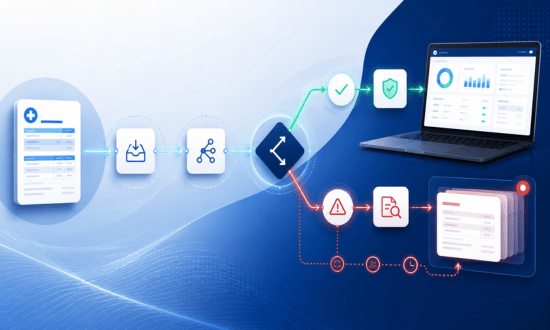
Rather than executing tasks independently, the partner becomes part of the operating model. They help design workflows, embed quality controls, and translate operational data into meaningful insight for leadership.
This approach supports more accurate claims, improved compliance readiness, and more consistent member experiences without relying solely on additional headcount.
From Outsourcing Tasks to Co-Creating Outcomes
When health plans treat their partners as an extension of their internal teams, the impact becomes visible across the organization.
- Rework declines because errors are identified earlier.
- Operational visibility improves because performance is tracked in real time.
- Member interactions become more proactive and less reactive.
This is no longer traditional healthcare outsourcing. It is operational co-creation.
Many organizations are now pairing deep operational expertise with modern workforce and operations intelligence platforms. These platforms provide clarity into where work slows down, why quality issues occur, and how capacity can be optimized without compromising compliance or accuracy.
The value lies not in automation alone, but in how data is used to guide decisions across claims operations, enrollment workflows, contact center performance, and quality management.
Redefining the Role of Healthcare Operations Partners
The health plans seeing the strongest operational outcomes are not selecting partners based on the lowest cost per transaction.
They are selecting partners who understand healthcare operations holistically. Partners who think beyond service level agreements. Partners who view every operational touchpoint as an opportunity to improve outcomes for members, providers, and internal teams. Partners who reduce total cost of ownership across the ecosystem.
As healthcare leaders plan for 2026 and beyond, the question is no longer whether to outsource, but how.
The real question is whether their operations partners are equipped to help them build the next generation of healthcare operations.
Subscribe To MDI Focus
Signup for free and be the first to get notified on new updates.
Tags
Stay Connected